Reading Less, Thinking More
I have been reading Less by Patrick Grant, a designer known for his work in British manufacturing and for speaking plainly about the impact of fast fashion. The book was recommended to me by a neighbour who is quietly, impressively eco‑conscious — the sort who keeps chickens in their London back garden — and approaches life with a level of environmental intention I admire.
It is not a book about carpentry, but it is very much a book about making: making thoughtfully, making responsibly, and making with an awareness of the world beyond our own routines. One idea in particular stayed with me. Grant writes about the strange truth that many modern, cheaply made items look their best the moment they come out of the box. They are designed for that first impression — the flawless surface, the perfect sheen — but not for the years that follow. Once they begin to live with us, they begin to decline. They are made to be bought, not to be used. By contrast, he reminds us that well‑made objects do the opposite: they gather character with use, becoming more themselves over time.
What struck me more than anything was the scale of what sits behind the things we buy. Some of the realities around fast fashion, waste, and overproduction are genuinely sobering. The pace at which clothing is made, sold, discarded, and replaced has shifted so dramatically that it is almost unrecognisable from even a generation earlier, and we have come to accept a level of consumption that would have seemed extraordinary within recent memory.
There is something unsettling about realising how quickly our expectations have changed, and it has altered the way we value the things around us. Reading about the volume of garments produced each year, and how many of them are worn only a handful of times, was a sharp reminder of how far we have drifted from a culture of care, repair, and longevity. It made me think not just about what we make in the workshop, but about the wider systems that shape how we live with the things we choose.
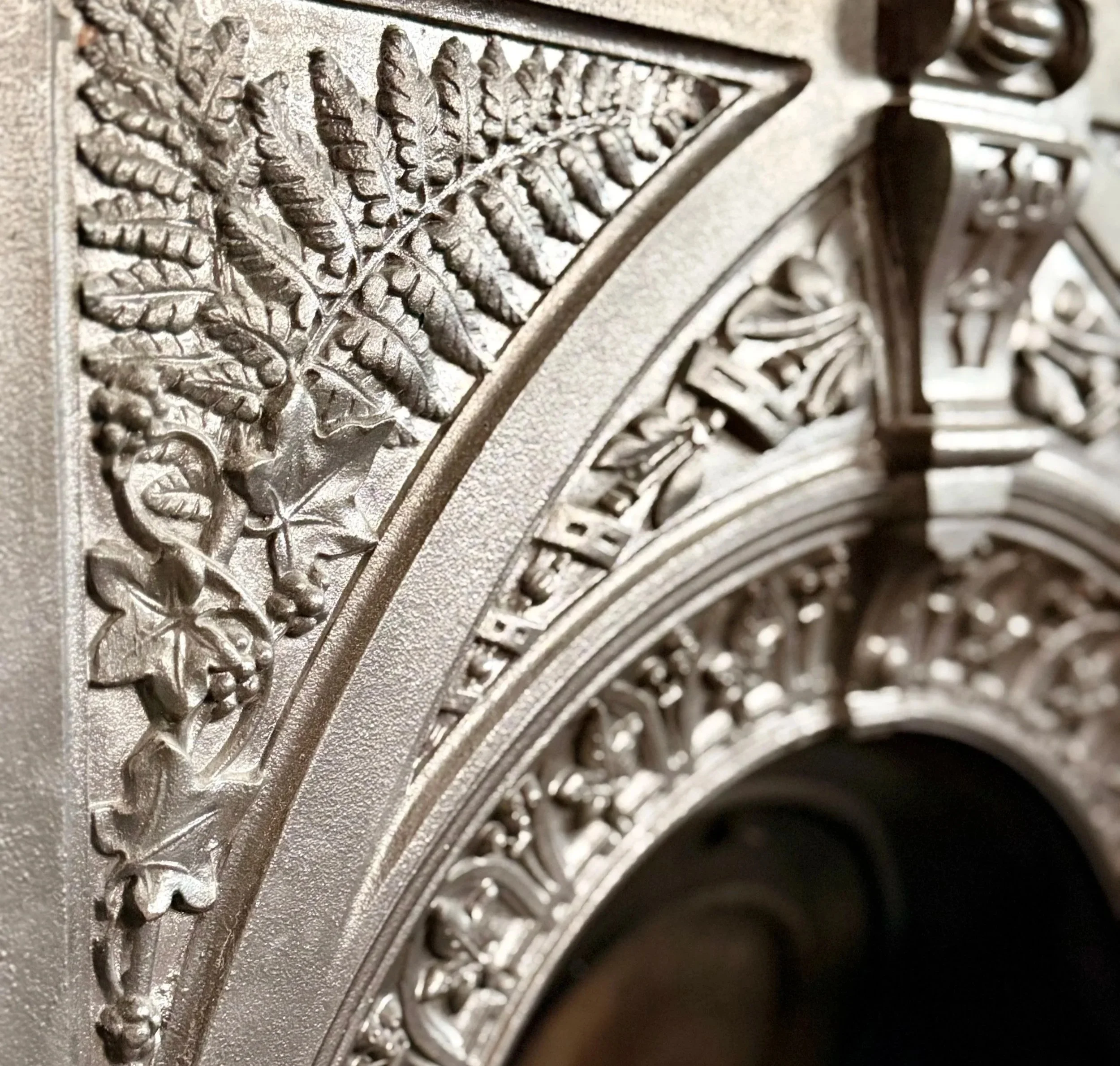
My reclaimed cast‑iron fireplace with fern‑leaf detailing, sourced from the Forest of Dean.
It has made me think about the kinds of objects that remain desirable as they age — the pieces that still hold value, still carry their history, and still feel worth passing on. Places like reclamation yards make this visible. They are full of objects that have already lived long, useful lives and still have enough integrity to be used again. There is a quiet sadness in recognising that we are no longer producing many things that will end up in places like these in generations to come. The beautifully made objects of the past feel, in many ways, like the last of their lineage.
I remember searching for a Victorian fireplace in a Forest of Dean yard filled with architectural salvage, standing among cast‑iron surrounds, tiled inserts, and pieces with real weight and history. What I did not see was a single mass‑produced imitation fire — the kind with plastic logs and a bulb pretending to be a flame, the very thing I was there to replace. None of those are desirable enough to be reclaimed, and that absence is telling. The things built with care remain. The things built for convenience simply do not.
I hope this instinct to choose the longer‑lasting option is one I keep hold of.